His Excellency,
The Most Reverend Edward K. Braxton, Ph.D., S.T.D.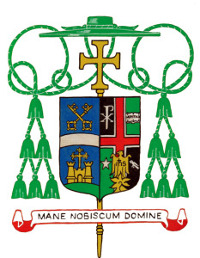
Diocese of Belleville
Sermon: First Sunday of Lent, February 21, 2021
St. Luke Parish, Belleville
“The Leap of the Heart:
George Washington, Abraham Lincoln and the Journey of Lent”
(This is the text as originally written. During the actual delivery, some passages were omitted and other comments were added spontaneously. Nota bene: This text has not been thoroughly proofread. Therefore, there may be errors in spelling, grammar and punctuation.)
Dear Sisters and Brothers in Christ:
I.
Tomorrow, February 22, is the 289th birthday of George Washington, who was born in 1732 in Popes Creek, Virginia. Abraham Lincoln was born February 12, 1809 in Hodgenville, Kentucky, 212 years ago. Since 1971, Americans have commemorated the births of our 1st and our 16th presidents on the third Monday of February. The primary impact of reducing their birthdays simply to “Presidents Day” has been that almost no one thinks of these two flawed giants of American history at all. Last week, we simply had a long holiday weekend and, were it not for the pandemic, a time for more shopping. There is little evidence that many Americans spend time learning about these towering chief executives on their birthdays.
Since the day honoring these iconic presidents always falls near Ash Wednesday, the beginning of Lent, it might be helpful to explore some of their views on religion and Christianity. Both men faced personal and political challenges that might have been illuminated by the light of faith and the teachings of Jesus.
We know George Washington was a member of the Anglican Church and a Mason. We also know he was very private about his religious beliefs. Unlike Thomas Jefferson, Benjamin Franklin and John Adams, Washington never wrote anything about his beliefs concerning God, Jesus Christ or Christianity.
The first president encouraged his fellow Americans to go to church regularly, but he himself was not a regular church goer. He served as a dedicated vestreman and a church warden, but he usually left services early without receiving Holy Communion. In his writings, Washington often made reference to “Divine Providence,” but he rarely mentioned God and he never referred to Jesus Christ. Some biographers argue that Washington was a deist who did not believe in a personal God. Thomas Jefferson said George Washington did not believe in what he called “the system of Christianity.” (The famous story of the first president “kneeling” in prayer at Valley Forge is probably not true since historians believe that when Washington prayed, he always remained standing.)
For 56 years, Washington maintained hundreds of enslaved free human beings at his plantation, Mount Vernon. Many commentators believe that he struggled with the practice of enslaving African people, perhaps because of his Christian background.
But, it was only in his will that he stated that, upon his death, his “slaves” should be freed. However, only one was actually freed. The rest remained in bondage for decades after Washington’s death. One may ask: If George Washington understood the commandment of Jesus of Nazareth to love God with our whole being and to love our neighbors as ourselves, he might have experienced the leap of the heart born of Lenten Love. He would have seen the absolute moral contradiction between “owning” free human beings and authentic Christianity.
Abraham Lincoln was apparently one of the deepest thinkers to occupy the White House. He was a deeply spiritual man but he had little interest in organized religion. As a young man, Lincoln seemingly lost interest in Christianity after seeing how excessive emotion and bitter sectarian quarrels marked yearly camp meetings and the ministry of traveling preachers. Like Washington, Lincoln enjoyed reading the works of deists. But, when accusations of hostility to Christianity almost cost him a congressional bid, Lincoln began to keep his unorthodox beliefs to himself. One biographer said “Lincoln’s views on Christianity were not orthodox: He held opinions utterly at variance with what Christians heard in their churches.”
But after being accused of being anti-Christian by a political opponent, Lincoln wrote: “I have been called an open scoffer at Christianity. That I am not a member of any Christian Church, is true; but I have never denied the truth of the Scriptures; and I have never spoken with intentional disrespect of religion in general, or of any denomination of Christians in particular.” (July 31, 1846, Handbill to the Voters of the Seventh Congressional District)
We know that one aspect of Lincoln’s parents’ Calvinist religion that he embraced was the "doctrine of necessity," or predestination. Belief in predestination seemed to influence much of President Lincoln’s thinking about the unfolding tragedy of the Civil War.
Because he penned the Emancipation Proclamation, which began the process of ending slavery, Lincoln has been called “the Great Emancipator” with many citing his statement “I have always hated slavery, I think as much as any Abolitionist. As I would not be a slave, so I would not be a master. This expresses my idea of democracy.” (Lincoln-Douglas Debate, August 1, 1858)
However, many Americans might be surprised to learn that this visionary leader, who was certainly not an abolitionist, was a product of the widely-held views concerning “white supremacy” of his day. He said, “I will say then that I am not, nor ever have been in favor of bringing about in anyway the social and political equality of the white and black races — that I am not nor ever have been in favor of making voters or jurors of negroes, nor of qualifying them to hold office, nor to intermarry with white people; and I will say in addition to this that there is a physical difference between the white and black races which I believe will forever forbid the two races living together on terms of social and political equality. And inasmuch as they cannot so live, while they do remain together there must be the position of superior and inferior, and I, as much as any other man, am in favor of having the superior position assigned to the white race. I say upon this occasion I do not perceive that because the white man is to have the superior position the negro should be denied everything.” (Lincoln-Douglas Debate, September 18, 1858)
Therefore, as with President Washington, President Lincoln’s life work might have been made even more extraordinary, if he had grasped the “Law of Love” of Jesus Christ. He might have experienced the leap of the heart born of Lenten Love, which would have compelled him to go against the tide by affirming the dignity and equality of every human person.
On March 4, 1865, in his second inaugural address, President Lincoln gave us food for thought for this Lent after a season of traumatic political conflict: “With malice toward none; with charity for all; with firmness in the right, as God gives us to see the right, let us strive on to finish the work we are in; to bind up the nation’s wounds; and to do all which may achieve and cherish a just, and a lasting peace among ourselves.”
This very small glimpse into the religious attitudes of George Washington and Abraham Lincoln remind us that these men were indeed MEN, not paintings in the White House, not mere etchings on the one and five dollar bills. They were real, live human beings on spiritual journeys, on the road to conversion, just as you and I are. Though neither of them was a member of the Catholic Church, they each experienced spiritual challenges of Lent in their own way.
II.
Dear Sisters and Brothers: On Ash Wednesday we heard again the sobering words, “Remember that you are dust and unto dust you shall return.” The ashes remind us of repentance, the mystery of certain death and the hope of eternal life.
George Washington and Abraham Lincoln have already made the journey from life to death, to dust. President Washington died after a brief illness on December 14, 1779. President Lincoln was brutally murdered by John Wilkes Booth on April 15, 1865. Does anyone ever think of them? Or pray for them? Do you? Probably not!!
Lent 2021 takes each of us on a journey to renew and deepen our baptismal commitments, to confess our sorrow for our sins and to pray for our catechumens who are preparing for the Easter sacraments. It is the continuation of our journey of conversion, though fasting, prayer, and almsgiving, making it possible for us to live lives of sincere faith, living hope, and effective works of charity.
Lent gives us forty days to repent for our wrongdoings and to anticipate the spiritual renewal that comes from the power of Christ’s death and resurrection. Often, we Catholics focus on giving up things we enjoy during Lent—favorite food, sweets, meat, coffee, cigarettes, television, other forms of entertainment. Of course, this morning’s gospel challenges us to do much more: “Jesus came to Galilee proclaiming the Good News of God: ‘This is the time of fulfillment. The kingdom of God is at hand. Repent of your sins and believe in the gospel.’” (Mark 1: 12-15)
This first Sunday of Lent we are called not so much to “give up,” but to “give in” to Jesus Christ with his commandment, “Love God with our entire being, love our neighbor as we love ourselves.” Jesus invites us to give up pride, anger, jealousy, greed, prejudice, indifference to the needs of others. rash judgment, and spiritual laziness. This is far more challenging than simply giving up dessert!
Jesus demands that we embrace a Lenten Love that is a leap of the heart. Lenten Love brings us out of ourselves and creates a bond of sharing with others. During Lent, the Holy Spirit reminds you and me of the need for “social love,” a love that goes beyond our family and friends and reaches out to all people in the community, especially those who are suffering and in need and those who grieve. Lenten Love that is leap of the heart means caring for and praying for those who suffer or feel abandoned because of the Covid-19 pandemic, even if they are not members of our families. It is precisely this type of radical Lenten Love, a leap of the heart, that would have led George Washington and Abraham Lincoln to the realization that one cannot say that one truly loves God while professing the inferiority of people of a different racial background.
Imagine what would happen in our parishes and here at St. Luke Parish if, for the forty days leading up to Easter, we all opened our spirits to Lenten Love and a call for a leap of the heart.
- Lenten Love and the leap of the heart calls us to actually pray more frequently and more sincerely—by focusing on a consistent time and place for personal prayer each day between now and Holy Week.
- Lenten Love and the leap of the heart calls us to deepen our personal relationship with Jesus Christ by meeting Him in the gospel, spending fifteen minutes a day in personal spiritual reading of the gospels of Matthew, Mark, Luke or John and actually applying the Word of God to our daily lives.
- Lenten Love and the leap of the heart calls us to take our commitment to almsgiving seriously. Even if we ourselves have limited resources, finding ways to be generous to others whose need is greater than ours, in this time of economic uncertainty.
- Most of all: Lenten Love and the leap of the heart calls us to return to the Sacrament of Reconciliation. So many Catholics almost never go to confession. Why not pray about confession after you receive the Body and Blood of Christ this morning? Talk it over with Jesus. Make a plan to experience Jesus’ forgiving power in confession before Easter.
Do not say that you are too busy to embrace a deeper meaning of Lent and its call to a love that is a leap of the heart. Ask yourself what you would do if you knew that this was, for you, the Lent of Lents: your last Lent here on earth?
George Washington and Abraham Lincoln lived their lives year after year seeking to do what was right and just following their own spiritual compass. Meanwhile, their Catholic neighbors moved through the season of Lent on a path of repentance and renewal. These two historic presidents and their Catholic contemporaries listened to the same scriptures that we heard proclaimed moments ago from the first letter of Peter:
“Beloved: Jesus Christ suffered for sins once, the righteous for the sake of the unrighteous, that he might lead (us) to God.” (1 Peter, 3:18-22)
“God gave Noah the rainbow sign.
No more warnings,
The fire next time!”
Praise be Jesus Christ. Both now and forever. AMEN! AMEN!